

Research
In line with its mission as the European sports management research network, EASM supports relevant publications and research projects. Since 2000, EASM has published the renowned European Sport Management Quarterly through Taylor & Francis. In addition, EASM is involved in research projects funded by the Erasmus+ Sport program.
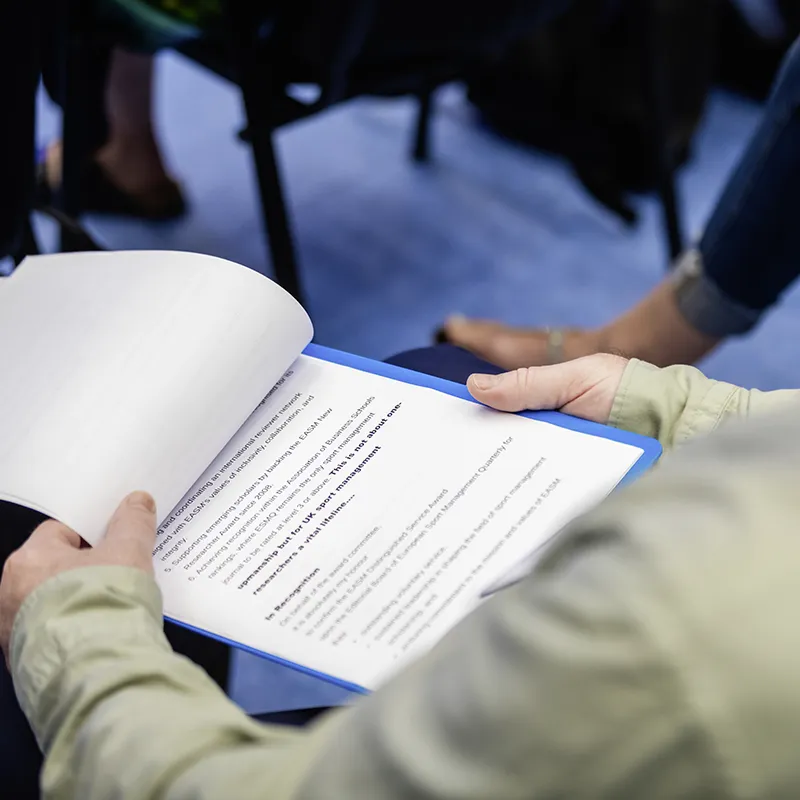
European Sport Management Quarterly (ESMQ) is the official journal of the European Association for Sport Management (EASM), and is listed in Clarivate Analytics’ Journal Citation Reports®. It has an international reputation for publishing high quality articles that contribute to our understanding of sport management and organizations at all levels. The journal is committed to publishing research that advances theory and its application to all aspects of sport management, including the management and governance of sport bodies in the public, voluntary and commercial sectors.
ESMQ welcomes original investigations that contribute new knowledge to the field of sport management through theoretical development and empirical application. In addition to high quality theoretical and empirical papers that are relevant to the European context, the journal will publish contributions in which critical insight for sport management practice is developed from different cultural and global perspectives.
In the Association of Business Schools’ Academic Journal Guide 2015 (1,401 business and management journals), ESMQ was rated as 3 – an indicator of ‘original and well executed research’. Based on citation scores and the judgements of leading researchers, ESMQ has the distinction of being the highest rated sport management journal in the ranking.
ESMQ can be accessed online on the Taylor & Francis website.


Project Overviews
Project Overview
The major outcome of the project will be to develop nationally-meaningful and European-wide guidelines and policy recommendations on how to plan, deliver and embed employability frameworks in higher education and other forms of education in order to develop an effective and sustainable sport management workforce to continue to govern and run a sport industry that promotes economic development and health-enhancing physical activity and social welfare across Europe.