Author: jacky

Call for Workshop Proposals

Call for Workshop Proposals

Deadline for submissions: 16th December 2019


The Scientific Committee of The European Sport Management Conference invites

sport management scholars and practitioners to organise Workshops on various subthemes

of sport management at our annual conference


28th EASM European Sport Management Conference Loughborough University London (UK),

16-19 September 2020.


Activate, Engage, Discuss and Produce Shifts Through Workshops

Workshops aim to share knowledge, encourage stimulating discussion and intellectual

engagement between participants on a particular subtheme (i.e. a specific focus within

a more general topic). Workshops can also be outcome focussed, for example to

integrate theory and practice; to build and foster networks; to channel work into

special issues in ESMQ or other journals or edited books; to shift existing fields; or

map out new sport management research territory.

Workshop organisers have to provide a design/format for their Workshops that enables

a significantly different appeal and ‘feel’ than traditional conference track topic

sessions (for track topics see past/current conference websites).

The Scientific Committee will select Workshop proposals that capture a defined subtheme;

have a clear aim; and have wide appeal to both presenters and conference

attendees. Accepted Workshops will be included in the official Call for Contributions

for the conference, which will be launched in January 2020.

Examples of Workshops organised at past conferences are available on the former

conference websites (www.easm2019.com).

Submitting Your Workshop Proposal

Parties interested in organising a Workshop should produce a document covering the

following information and email it to the EASM Scientific Chair Guillaume Bodet and

the EASM 2020 Scientific Committee, info@easm2020.com , inserting ‘Call for

Workshop Proposals’ in the email subject, by the stated deadline.

1. The sub-theme/suggested title of the proposed Workshop.

2. A short description of the relevance and aim of the proposed Workshop (max. 500

words). Please remember that the title, the aim and the description should be used

to arouse interest in the Workshop when announced in the conference Call for

Contributions and when you promote the Workshop within your own network.

3. Expected submissions to the Workshop:

a. Names of likely contributors (at least 7)

b. Communicational efforts how you intend to attract contributors to your

conference Workshop besides the general conference Call for Contributions.

4. The desired format and ‘flow’ of the Workshop

a. Please outline the point of difference from standardised track presentations

(e.g. one or a mix of the following: small symposium, panels, debates;

presentation of short/full papers and/or impact cases, focus on or mix of

practitioner/policy/academic contributors, technology-enhanced delivery,

etc.). Typically, yet dependent on the number of submissions, we allow for 2

sessions (about 160 minutes overall) in the conference programme.

b. Conveners could invite high-profile guest presenters on a complimentary dayticket

(on their own travel expenses and after discussion with the Scientific

Committee) in order to increase the appeal of the Workshop or to facilitate

theory-practice integration shall this be of benefit to the Workshop outcome

and participants’ conference experience.

5. Please mention if you are aware of any journal special issues on the topic of the

proposed Workshop with a submission date later than September 2020 or any other

output/impact Workshop participants might be able to contribute towards. Details

about the Conveners:

a. The names, institutions, email addresses, phone numbers, research fields, and

short bio (about 100 words) of all Conveners (min. 2/max. 4, representing

more than one country).

b. Indicate the name of the Lead Convener as this person will be responsible for

all communication with the Scientific Committee; be involved in the review

process of submissions to the Workshop; the coordination of contributors

(once submissions or other speakers are accepted); and the running of the

Workshop in Seville. All Conveners need to register for the conference.

c. A brief outline of the Conveners’ contribution to the topic (max. 300 words,

plus references of recent publications/outputs on the topic and/or of practical

work/impact). In addition, please refer to the history of the Workshop or

similar events if it has been hosted by you at previous conferences.

Conveners agree to prepare a brief written review of the Workshop within three weeks

after the conference (about 400 words). Reports might be published on the

conference/EASM website or used as reference for future activities.

The deadline for submitting a Workshop proposal is 16 December 2019

Proposals will be judged against the stated criteria, taking into account quality and

relevance. Only a certain number of Workshops can be considered and facilitated at

the conference.


The conference is organised in cooperation with the Loughborough University
London. Please visit www.easm2020.com for information about this leading
international conference, yet again held in a wonderful location.

Lecturer Sport Business Management

About the role
This position will provide teaching, research and administration into the sport management and sport business programs within the College of Sport and Exercise Science. The successful applicant will be a leader in the area of sport management within the College of Sport and Exercise Science making a strong contribution to the discipline across a range of areas. They will contribute in all aspects of education, curriculum development, research and knowledge exchange activities that involve unit convening and teaching and industry engagement.

About the person
The successful candidate will have a doctoral qualification (or be working towards completion) in an area of relevance to sport business management or a Master’s qualification in an area of relevance with significant industry experience.  They will have the ability to teach at a university level in areas such as sports marketing, facility and event management and sport business management. They will have knowledge of contemporary pedagogies appropriate for the discipline and that are suitable for working with students with a wide range of abilities and educational backgrounds. They will also have existing relationships and an ability to further enhance engagement with external bodies to enhance the national and international standing of the discipline.

Duties

  • Teach at both undergraduate and postgraduate levels into a range of programs offered by the College of Sport and Exercise Science
  • Perform appropriate administrative tasks commensurate with the positions responsibilities including unit development
  • Engage in research, scholarship and professional activities appropriate to the area of sport ethics

Benefits

  • Salary sacrifice options
  • Professional development opportunities
  • Flexible working arrangements available
  • Paid study leave

How to apply
For a position description click here
Apply now

Applications must be submitted as a single document comprising:

  • A cover letter
  • Your curriculum vitae/resume, and
  • Your responses to the selection criteria listed in the position description.

Note: Applications which do not address the selection criteria will not be considered.

An amazing experience. Always in my mind.

Dear students,

My name is Pablo García, I was a volunteer at the 27th European Sport Mangement Conference and I also helped with the development of the Student Seminar held at University Pablo de Olavide. This was not my first time helping in a huge congress like this but it was the first which I was hand to hand on the front of the battle line. For me it was an unforgettable personal experience. The kind of learning a young man like me appreciates not only for my own growth but also for the teachings and the knowledge I had the chance to listen to keynotes and conference sessions in an unknown field for me: sport management.

I really hope you guys enjoyed this week in this fabulous city. And I hope that the Student Seminar, the PhD Seminar and the Conference were a place for exchange and learning for all of you and like me, you can not forgot this week. I will remember all my friends I met in Seville and of course, I will try to see you again next year in London.

All the best,

Pablo García.

EASM 2019

The 27th European Sport Management Conference was an amazing opportunity for networking and creating connections with sport management students and professionals from all around the world. More than 80 students from different universities across the world took part in this week-long conference. The students had a unique opportunity to attend a four-day Student Seminar and a three-day European Sport Management Conference, in a beautiful city of Seville. The topic of this year’s conference, ‘Connecting Sport Practice and Science’ was examined and discussed countless times during the conference.

The Student Seminar started with a welcome reception on the day of arrival, 30th of August. During the reception, all of the students had a chance to get to know each other and create connections before the actual student seminar. The academic part of the Student Seminar got a great kick-start 1st of September when the case studies for a Management game were presented by the representatives from the sport management field in Spain. These four cases were actual problems faced in the Spanish sport management field and the students had to come up with solutions for them. Four cases were presented, and the students were divided into 16 groups of 4 people. All of the groups had three days to come up with a solution for the cases and prepare presentations for the company representatives. The winning group was voted on Tuesday the 3rd of September, the last day of the student seminar, and the winners got a chance to present their solution at the actual conference.

During the three-day student seminar, the students got many memorable opportunities to create networks and enjoy Spanish culture through social gatherings, sightseeing, and cultural visits. The seminar also included many up to date presentations by academics from the sport management field. For example, Hans Westerbeek from Victoria University gave a memorable lecture about the future of sport science and Patric Nelly from West Nelly about the importance of marketing in the sport management field.

The European Sport Management Conference got an amazing start on the 4th of September with Hans Westerbeeks’ keynote about speculating the Sport Business Future. After that, the three days of the conference consisted of presentations and workshops. These presentations and workshops were held by academics in the sport management field. All of the presentations were divided under different themes, such as i.e. Sport Marketing, Sport Governance and Policy, Sport Development and Socio-Cultural Perspectives, etc. Based on those themes the presentations and workshops had their individual rooms and all of the students and academics had a chance to choose to participate in the presentations they wanted. I personally chose most of the lectures covering the themes of Good Governance, Governance and Policy, and Sport Law and Ethics. What is also noteworthy the conference included several social gatherings e.g. the opening ceremony.

This European Sport Management Conference was an incredible opportunity for me to grow professionally as well as an individual. I got to meet so many amazing people from all around the globe and today call those amazing people as my friends.  I can’t wait to meet them again and maybe even have the privilege to work with some of them one day.

//Ida Kivisilta


EASM becomes a member of EPAS

EASM is proud to announce that the association has become a member of the Consultative Committee of the Enlarged Partial Agreement on Sport (EPAS) of the Council of Europe.
The Consultative Committee of EPAS  currently consists of 26 sport NGOs advising the Governing Board of EPAS on sport matters. EASM will work closely with the representatives of national sport ministries and will raise and discuss issues of concern to contribute to future policies in sport. 
EASM’s partnership application was accepted last month and the EASM Board is looking forward to representing the community as the voice of Sport Management in Europe.

Call for Papers: ESMQ 2021 Special Issue

Societal Impacts of Elite Sport: Positives & Negatives


Relevance of the topic


In the early twenty-first century, elite sport[i] became an increasingly important policy priority (Green, 2009). When facing the challenge of justifying investments in elite sport to the public, elite sport policymakers tend to argue that a wide range of societal outcomes will ‘trickle down’. However, there is scarce evidence to support this dominant discourse (Grix & Carmichael, 2012). The nature of this special issue is therefore timely as it underscores the critique that public investment decisions are often politically motivated and thus rarely evidence based. Undeniably, the current empirical evidence base regarding a range of claimed impacts generated in the context of elite sport is inadequate and fragmented (Frick & Wicker, 2016; Funahashi, De Bosscher, & Mano, 2015; Van Bottenburg, 2013). When measuring impacts assumed to be triggered by elite athletes, sporting success, or the organisation of major sporting events, it seems that academics have traditionally used study designs where causality is difficult to establish. A further criticism of elite sport impact research is the strong use of case studies and expert opinion with the subjective perceptions of individuals playing a key role as the main source of evidence. This special issue resonates with calls for the research community to contribute to empirical research with robust and appropriate research designs rather than offering assertions or opinions (Weed & Dowse, 2009).

Moreover, we propose a shift of focus from ‘if’ public investments can be legitimised towards ‘how’ public investment can be allocated (more) successfully for social impact purposes. Intrinsically, elite sport is neither beneficial nor harmful (Coalter, 2007). If we believe that elite sport can and should enable impacts, then we need to ask how elite sport should be envisioned and implemented to enable and, ideally, optimise its assumed impacts. Overall, the quality of evidence for the impact of elite sport in relation to several outcome areas is relatively weak (De Rycke & De Bosscher, 2019). We contend that what is required to develop the field is innovative, robust research such as mixed-method designs based on theories of change, which are more appropriate for establishing causality. Research that pushes forward with (inter- and transdisciplinary) research designs (e.g., mixed-methods), informed by recognised conceptual frameworks will assist in providing a more solid evidence-base to guide the decision-making of practitioners and policymakers. Therefore, the purpose of this special issue is to refine the investigation into the assumed societal impacts of elite sport. Theoretical, empirical, and methodological submissions in light of the problematic evidence base and resulting limited understanding of the role of elite sport in society are welcomed.

Overall, the Special Issue on the Societal Impact of Elite Sport aims to:

  • review the current state of theoretical and empirical researchregarding the potential positive and negative societal impacts that flow from the various ways elite sport is organised, managed and marketed in society;
  • critically reflect on the existing research designs and encourage interdisciplinary explorationas well as new approaches that contribute to the understanding of the assumed societal impact of elite sport; and
  • propose a future research agenda for robust measurement of the assumed societal impacts of elite sport.


Possible themes and subthemes this proposed special issue would include:


Contributions are welcome from any social or human science discipline, including sport management, marketing, sport policy, sociology, sport psychology, and sport economics. Robust qualitative, quantitative and mixed method research approaches that focus on the societal impact of elite sport are encouraged. We are looking for studies that advance theory and knowledge on the understanding of societal impact of elite sport. For instance, studies that apply innovative methodologies or that may contribute to broader methodological debates. Additionally, we particularly value research that goes beyond the well-used qualitative methods or traditional quantitative research strategies that are well established in sport management studies.

Research that aims to investigate assumed positive or negative societal impacts empirically in the context of elite sport is specifically encouraged. We invite contributors to examine the themes and subthemes outlined briefly below.

  1. Research on social equality and inclusion in the context of elite sport; investigations of the potential of elite sport (when properly leveraged) to bridge different cultures and increase equality (e.g. social mobility). Or, studies on manifest and institutional forms of discrimination (e.g. sexism, exclusion, exploitation, racism, human trafficking, etc.) in the context of elite sport.
  2. Research on identity and pride; international sports events are used to highlight national symbols and present athletes and teams as representatives of nation states. This phenomenon provides occasions for the public expression of national values, pride, collective unity, identity and nationalism, rivalry and aggressive behaviour.
  3. Research on ethics and fair play in the context of elite sport; elite sport provides a platform for ethical conduct and positive social debate but is often associated with unethical practices: scandals regarding corruption and fraud, competitive traits, aggression/violence, doping, unfair play and other deviant behaviour examples.
  4. Research on the ‘feel good factor’ or ways in which sports fans who attend or watch live sporting events derive a pleasurable form of excitement, happiness and satisfaction. Or, in contrast, experience anger, disappointment, frustration or hostility.
  5. Research related to the attractive power of elite sport. Sport events, teams and athletes enjoy a great deal of worldwide media coverage and have the potential to build strong brands by capitalising on the emotional relationship shared with fans.
  6. Research on international prestige and image; ‘showcase effects’ can occur when sport offers an arena for countries to compete with each other to gain international recognition and prestige. Indeed, countries bidding for major events sometimes do so to create a powerful public stage for their ideological battles, for propaganda, or to gain soft power.
  7. Research on the stimulation of sport participation and healthy behaviour in the context of elite sport; investigations whether athletes provide inspiration to develop an active lifestyle or alter personal characteristics (volunteering, character building, self-efficacy…). Or, studies on negative impacts like decreased body image or discouragement to participate in sport due to the competence gap with successful athletes.
  8. Research on sponsors and commercial activity in the context of elite sport; partnerships and sponsorship deals hypothetically lead to direct economic impacts relating to merchandise sales, TV rights, jobs or sport industry assets. Nonetheless, throughout history, there is evidence of mega-event organisers suffering from financial hangovers.
  9. Research on the local beneficial and harmful impacts of elite sport-related activities; studies reporting on tourism, consumption, employment, exploitation costs and the impact on living conditions within host communities (e.g., overcrowding, disorder and price rises). Host cities often try to regenerate neighbourhoods by investing in public transportation, local infrastructure, hotels and green zones. It is notable that when hosting mega-events there can be negative environmental impacts (including air pollution, waste…).


Call for the ESMQ 2021 Special issue


Papers should be submitted in electronic format through Manuscript Central using the following link: http://mc.manuscriptcentral.com/resm; indicating you want the manuscript to be considered for Special Issue 21.1.


Proposed and Indicative Timeline:


September 5, 2019:     Workshop 8 @ the 27th EASM 2019 Conference (Seville, Spain, 3-6 September 2019). This was an optional activity.

October, 2019:            Call for Papers for the Special Issue is widely disseminated

May 30, 2020:             Submission deadline of full papers for consideration. Manuscripts in review process.

September 1, 2020:     Feedback to authors

November 1, 2020:     Return date for revised manuscripts

December 1, 2020:     Second round of review process (if necessary) and finalisation

December 31, 2020:   Chapter written by SI editors – introduction to the SI

December 31, 2020:   Materials are prepared for final publication and sent to publisher

Januari, 2021:             First ESMQ issue of 2021


Name and affiliation of Guest Editors


Veerle De Bosscher, Vrije Universiteit Brussel, Belgium
Simon Shibli, Sheffield Hallam University, UK
Maarten Van Bottenburg, Universiteit Utrecht, The Netherlands
Jens De Rycke, Vrije Universiteit Brussel, Belgium

Please contact Veerle De Bosscher via email (veerle.de.bosscher@vub.be) if you have any questions.


References

Coalter, F. (2007). A wider role for sport: Who’s keeping the score. London: Routledge.

De Rycke, J., & De Bosscher, V. (2019). Mapping the Potential Societal Impacts Triggered by Elite Sport: A Conceptual Framework. International Journal of Sport Policy and Politics. Advance Online Publication.https://doi.org/10.1080/19406940.2019.1581649

Frick, B., & Wicker, P. (2016). The trickle-down effect: how elite sporting success affects amateur participation in German football. Applied Economics Letters, 23(4), 259–263. https://doi.org/10.1080/13504851.2015.1068916

Funahashi, H., De Bosscher, V., & Mano, Y. (2015). Understanding public acceptance of elite sport policy in Japan: A structural equation modelling approach. European Sport Management Quarterly, 15(4), 478–504. https://doi.org/10.1080/16184742.2015.1056200

Girginov, V., & Hills, L. (2009). The political process of constructing a sustainable London Olympics sports development legacy. International Journal of Sport Policy and Politics, 1(2), 161–181. https://doi.org/10.1080/19406940902950713

Green, M. (2009). Podium or participation? Analysing policy priorities under changing modes of sport governance in the United Kingdom. International Journal of Sport Policy and Politics, 1(2), 121–144. https://doi.org/10.1080/19406940902950697

Grix, J., & Carmichael, F. (2012). Why do governments invest in elite sport? A polemic. International Journal of Sport Policy and Politics, 4(1), 73–90. https://doi.org/10.1080/19406940.2011.627358

Grix, J., Lindsey, I., De Bosscher, V., & Bloyce, D. (2018). Theory and methods in sport policy and politics research. International Journal of Sport Policy and Politics, 10(4), 615–620. https://doi.org/doi.org/10.1080/19406940.2018.1537217

Van Bottenburg, M. (2013). “Passion alone is no longer enough”: the reframing of elite sport from a private trouble to a public issue. In P. Leisink, P. Boselie, M. Van Bottenburg, & D. M. Hosking (Eds.), Managing Social Issues. A Public Values Perspective (pp. 126–142). Cheltenham, UK: Elgar, Edward.

van der Roest, J.-W., Spaaij, R., & van Bottenburg, M. (2015). Mixed methods in emerging academic subdisciplines: The case of sport management. Journal of Mixed Methods Research, 9(1), 70–90.

Weed, M., & Dowse, S. (2009). A missed opportunity waiting to happen? The social legacy potential of the London 2012 Paralympic Games. Journal of Policy Research in Tourism, Leisure and Events, 1(2), 170–174.

[i] Elite sport, or high-performance sport, is sport at the highest level of competition, with elite athletes as the competitors

Assistant Professor of Kinesiology

Assistant Professor of Kinesiology (Sport Sociology, or Sport and Exercise Psychology)
School of Kinesiology, University of Minnesota


UNIVERSITY OF MINNESOTA, TWIN CITIES

The University of Minnesota Twin Cities (UMTC) is among the largest public research universities in the country, offering undergraduate, graduate, and professional students a multitude of opportunities for study and research. Located at the heart of one of the nation’s most vibrant and diverse metropolitan communities, students on the campuses in Minneapolis and St. Paul benefit from extensive partnerships with world-renowned health centers, international corporations, government agencies, sport organizations, arts, nonprofit, and public service organizations. Further information about the UMTC is found at http://twin-cities.umn.edu/about-us and on the Relocation Assistance Program site https://humanresources.umn.edu/find-job/rap.

The School of Kinesiology at the UMTC has a rich tradition of research and scholarship, combined with excellence in teaching and service. The mission of the School is to enrich the quality of human life by expanding, applying, and disseminating the body of knowledge germane to human movement, physical activity, and their applied systems. Complete information on the School can be found on the website, http://www.cehd.umn.edu/kin.

ABOUT THE JOB

The School of Kinesiology, College of Education and Human Development, UMTC, is seeking an outstanding candidate to fill a tenure-track Assistant Professor position in Kinesiology with a specialization in Sport Sociology or in Sport and Exercise Psychology. The appointment is for a full-time, 9-month position, and is contingent upon qualifications and University of Minnesota processes. Salary is competitive and commensurate with experience. The start date is August 31, 2020, which is the beginning of the 2020-21 academic year.

POSITION DESCRIPTION

The position expectations include:

+ Developing and sustaining an active and independent research program in Sport Sociology or in Sport and Exercise Psychology.
+ Contributing to the research and engagement activities of the Tucker Center for Research on Girls & Women in Sport, an interdisciplinary research center devoted to sponsoring, promoting, and disseminating scholarly work on how sport and physical activity affect the lives of girls and women, their families, and communities.
+ Seeking and securing internal and external funding to support research and other scholarly work.
+ Disseminating research findings through publication and presentation in the scientific community.
+ Teaching undergraduate and graduate courses in Sport Sociology and/or in Sport and Exercise Psychology.
+ Mentoring and advising masters and doctoral students for thesis and dissertation research.
+ Participating in service at the departmental, college, and University levels, as well as in one’s professional field and within the public community.

MINIMUM QUALIFICATIONS

+ Earned PhD in Kinesiology, Sociology, Psychology or related-field with a specialization in Sport Sociology or in Sport and Exercise Psychology with degree conferred before the start date of the hire.
+ Focused research agenda and potential for sustained research productivity in Sport Sociology or in Sport and Exercise Psychology, as demonstrated by publications in high-quality, peer-reviewed scientific journals and refereed presentations at scientific conferences.
+ Scholarly expertise and accomplishment related to the sociocultural or psychological aspects of girls and women in sport and physical activity.
+ Potential for receiving extramural funding to support research and other scholarly work.
+ Potential for excellence in teaching undergraduate and graduate courses in Sport Sociology and/or in Sport and Exercise Psychology.
+ Potential for success in the advising and mentoring of graduate and undergraduate students.
+ Commitment to active engagement in service activities of the School, College, University, profession, and community.

PREFERRED QUALIFICATIONS

+ Expertise and commitment needed to make substantial contributions toward the research productivity and the public engagement activities of the Tucker Center for Research on Girls & Women in Sport.
+ Experience in conducting interdisciplinary and collaborative research with colleagues in other related fields of Kinesiology and within the broader scientific community.
+ Experience in teaching undergraduate and/or graduate courses in Sport Sociology and/or in Sport and Exercise Psychology.

HOW TO APPLY

Applications must be submitted online. Follow the application directions below to be considered for this position. You will have the opportunity to complete an online application for the position at http://humanresources.umn.edu/jobs and attach a cover letter and resume. Additional documents may be attached after application by accessing your “My Job Applications” page and uploading documents there.

To receive the fullest consideration, applications should be received no later than October 28, 2019. Completed applications will consist of: (a) a letter addressing qualifications that relate to the position; (b) a curriculum vitae; (c) 3 sample publications; and (d) contact information for at least 3 references. Questions about the position should be directed to Dr. Diane Wiese-Bjornstal, Search Chair, at dwiese@umn.edu. Questions about the application process should be directed to Gao Thao at thaox744@umn.edu. This position will remain open until filled.

DIVERSITY

The University recognizes and values the importance of diversity and inclusion in enriching the employment experience of its employees and in supporting the academic mission. The University is committed to attracting and retaining employees with varying identities and backgrounds.

The University of Minnesota provides equal access to and opportunity in its programs, facilities, and employment without regard to race, color, creed, religion, national origin, gender, age, marital status, disability, public assistance status, veteran status, sexual orientation, gender identity, or gender expression. To learn more about diversity at the U: http://diversity.umn.edu.

To request an accommodation during the application process, please e-mail employ@umn.edu or call (612) 624-UOHR (8647).

EASM Board is complete

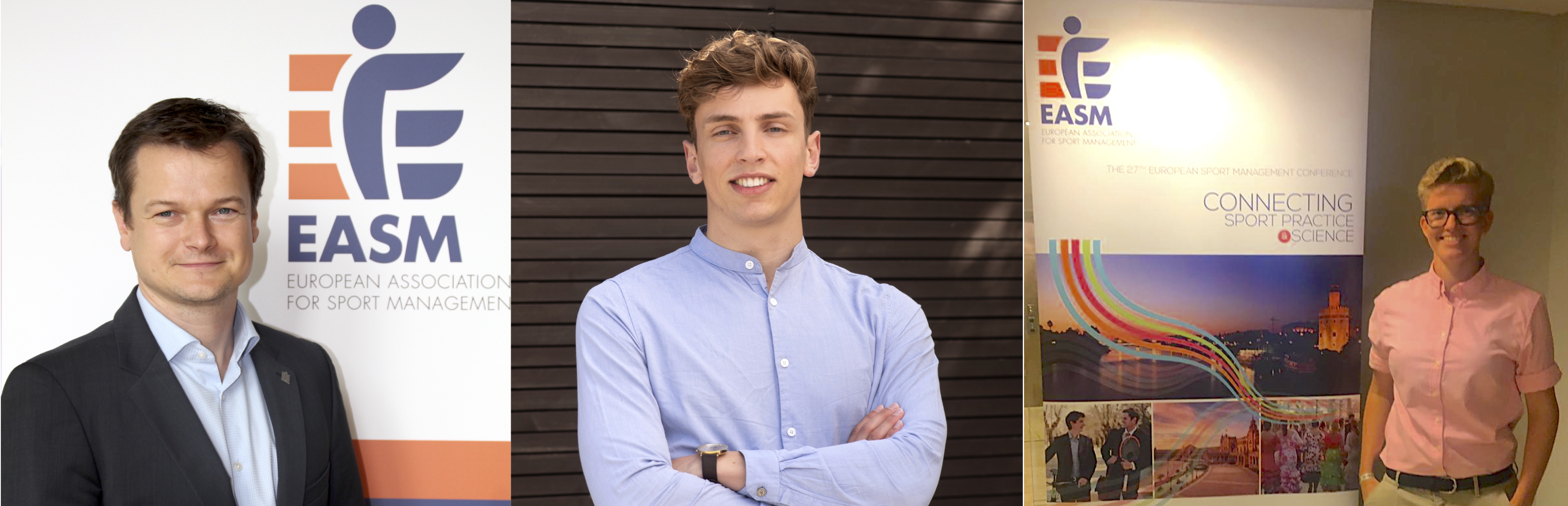
At the first meeting of the newly elected EASM Board, Stefan Walzel was unanimously confirmed and officially appointed as Secretary General. Furthermore, Emma Baker and Christian Overduin introduced themselves as candidates for the board position as student representatives. The Board appointed Christian Overduin to the Board and is very pleased that Emma Baker will support him.

Congratulations and much success!

Erasmus + Run for Health project gathered in Utrecht

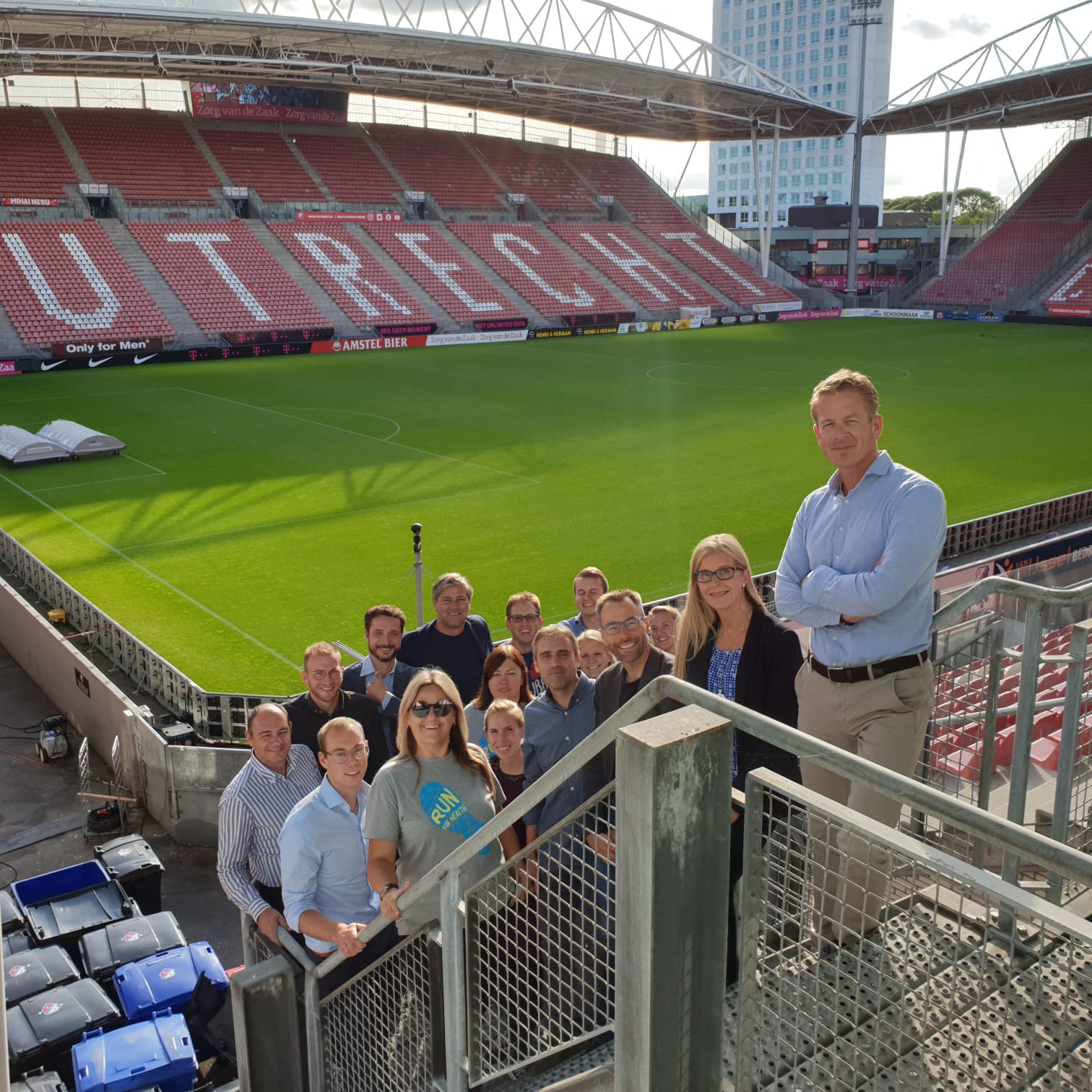
The EU funded Run for Health project had its second meeting in Utrecht from September 19 – 20 2019. The project aim is to study running events, develop guidelines for health enhancing promotion through running events, increase awareness of their effects in physical wellbeing, and develop policy recommendations and in European level.

More information on the project can be found here: https://www.runforhealth.eu/